
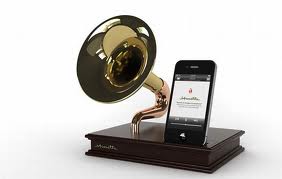
 As I continue my love affair with my iPhone and, more recently, my AppleTV and as I partially capitulate to the slow, inflexible and generally crappy iTunes as a required gateway to my beloved devices, I am reminded of the golden era of online music. I feel sorry for those who were too young or too old (and technophobic) to have experienced that fun and enlightening time.
Let’s reminisce a moment about the good old days, from around 1997 through the early part of this century. Back when MP3.Com was a legitimate music hub, with hundreds of new, unsigned and independent musicians and bands bringing their music directly to the eager public for the first time. If I ranked the songs on my music server, a surprisingly high number of my favorite songs would be songs I found on MP3.Com. Songs like Dear Elaine, by a band called Buckeye. San Antone by Brementown. Driver 75 by Shy Dragger. If You See Mary, by Juarez. Crooked Country’s Whiskey Burns. Piece of Heaven by Chochamo. Jerkwater USA from The Calamities. There were hundreds more. I remember spending hours upon hours surfing around MP3.Com in some musically induced euphoria from all the great stuff I found and legally downloaded there. I even formed a cyber-band called Rancho DeNada and put some of our songs up there. The web was still relatively new. Getting great songs without having to go to the store and buy a CD was new. Life was mystical, musical and fun. No one had ever heard of the RIAA.
These years were also, perhaps not coincidently, the height of the alternative country movement. Every time I logged into my computer there was another new band filling my mind and ears with rock and roll songs played twang-style with country instruments. Steel guitar and Caitlin Cary‘s violin became the soundtrack of happy musical stories taking place all over the world.
eMusic was another place to mine for new music. It took a little work to separate the wheat from the chaff, but you could find good stuff from new and emerging artists if you looked around. eMusic still exists and is the only one of these services that looks anything like it did during the golden era. But eMusic lost its mojo somewhere along the way. Like AOL, it’s still around, but it’s no longer the hip place to be.
Then came Napster. I didn’t really understand the concept when I first heard about this so called “peer to peer” song sharing application.

It wasn’t until late 2000 that I finally relented and gave it a try. I didn’t use Napster to find new music. I used it to digitize some of my thousands of LPs and CDs (all of which now sit in storage thanks to my music server), and to look for old, obscure and out of print songs. I probably found 90% of the old, obscure stuff I looked for. One song, Fred Knoblock‘s Why Not Me, proved so elusive, I had to buy the LP on eBay and convert it to MP3. It was also fun just to look at people’s libraries, particularly people you knew shared your musical tastes. I bought a ton of CDs from Amazon just because I saw them listed in libraries I knew to be close to my tastes. It was a stone age Pandora of sorts.
It was also sharing with a purpose. Not the synthetic sharing that seems to drive many of today’s applications. I once met a fellow musician who lived half way across the country and within the first half hour of chatting we realized that we had shared libraries on Napster for months.
But like just about everything that seems too good to be true, it didn’t last. Metallica, Dr. Dre and the cat-chasing, empty bag-holding record labels ganged up on Napster like a horde of peasants outside Frankenstein’s castle and destroyed the technology they feared. MP3.Com, in a move that foretold the future, started letting users register (not upload) their CDs and access them anywhere, leading the increasingly panicked horde to its castle door. Before long, the record labels were suing grandmothers for allegedly sharing music they’d never heard of, while the guerilla sharers moved from one lesser substitute to another.
The golden age was over. The record labels embarked on a schizophrenic quest to either kill or embrace online music. They tried DRM. They tried futilely to plug as many torrent holes as possible. Ultimately, they began to tire of tilting at the infinitely reproducing windmills and let Amazon and now (sort of) Apple sell songs the right way, accepting the inevitable fact that most music buyers aren’t pirates and those that are will always find loot to pillage.
At the end of the day, Amazon, CD Baby and, maybe, iTunes will become acceptable substitutes for the direct distribution of music. But the experience is not as fun as it used to be and, sadly, there is not as much unsigned and independent music to be discovered there. I like Amazon MP3 downloads. I loved those MP3.Com downloads.
I suppose MySpace is the new direct distribution point for a lot of bands (here’s Buckeye’s page), but MySpace has a lot of extraneous content cluttering up the experience. MP3.Com and the others were all about the music.
So while the hardware has gotten better and better, I’m not sure the applications have. I miss the good ol’ days.

